El asombroso fenómeno que hace billar las olas del mar en la oscuridad
Se trata de una floración de algas marinas que está iluminando el océano
ideal.es
Domingo, 13 de mayo 2018, 10:12
Tras el extraño arcoiris de fuego que apareció sobre el cielo de Kentucky, aor nos hacemos eco de otro asombroso fenómeno natural. Se trata ... de uno que ha aparecido en las costas de San Diego, en California, que hace que las olas del mar brillen en la oscuridad.
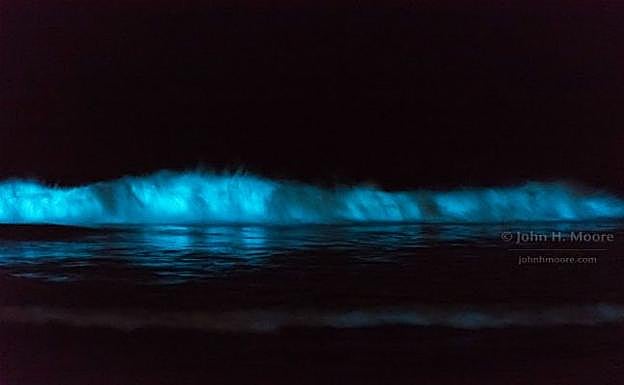
Se trata de una floración de algas marinas que está iluminando el océano. Los medios locales explican que el fitoplancton bioluminiscente de esta formación de algas ha estado iluminando la costa desde la Jolla hasta Encinitas. En total, 30 kilómetros que han sido recogidos así en Twitter:
Do you have pictures of the beautiful bioluminescence that happened in the San Diego ocean last night? Send them over here to get your picture featured on #NBC7 https://t.co/f9nZxvva0f pic.twitter.com/N9jI0DQJCO
— Danielle Radin (@danielleradin) 9 de mayo de 2018
Photo by Amy Utter. Dinoflagellates are both animal and plant, they are also bioluminescence. @Scripps_Ocean scientist are sampling the current red tide to learn more about the genetic and metabolic characteristics of the organisms. @10News #sandiego #nightflow #science pic.twitter.com/dxORaaAmDy
— Angelica Campos (@10NewsCampos) 9 de mayo de 2018
Last night's incredible display of bioluminescence at Torrey Pines State Beach pic.twitter.com/6DKaw22bpm
— Stephen Bay (@stephen_bay) 8 de mayo de 2018
A #RedTide has brought #bioluminescence to San Diego beaches. Learn more about the phenomenon here: https://t.co/tB60nDSkHD. Photo by Erik Jepsen/UC San Diego pic.twitter.com/JiKg28Gz42
— Scripps Oceanography (@Scripps_Ocean) 9 de mayo de 2018
A red tide offshore San Diego is bringing a spectacular display of #bioluminescence to beaches at night, as captured in this photo by John H. Moore. Scripps scientist Michael Latz said the red tide is due to massive numbers of dinoflagellates including Lingulodinium polyedra. 🌊 pic.twitter.com/JnSlXGBuEs
— Scripps Oceanography (@Scripps_Ocean) 8 de mayo de 2018
¿Tienes una suscripción? Inicia sesión